Split Tunneling arrives in Portmaster 2.2.1

BLOG -
17. Jul 2026
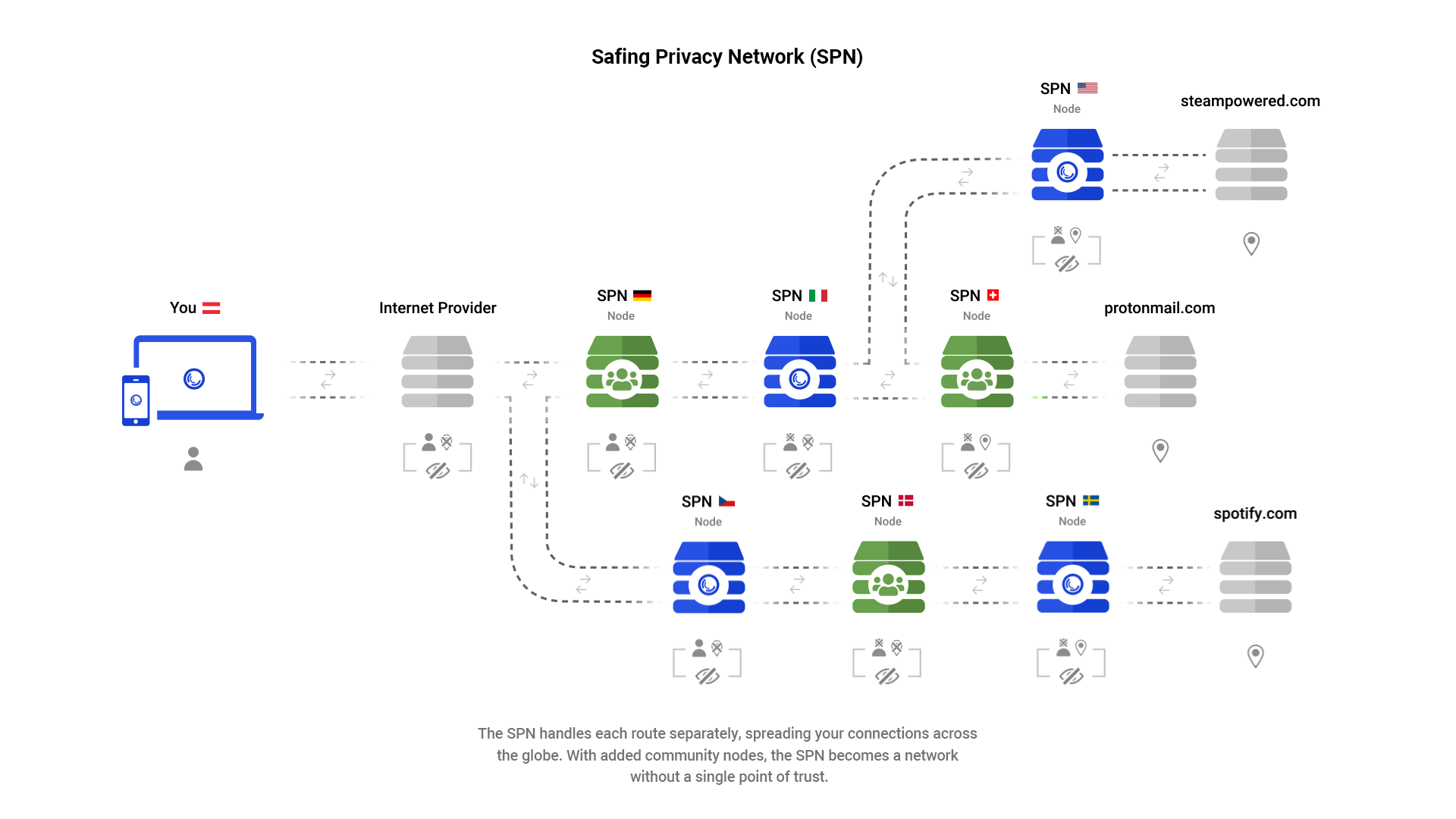
Most VPNs route all traffic through a single exit node. SPN routes each connection through a separate path across different nodes, applying layered encryption at each hop, providing per-connection IP separation across all your applications.
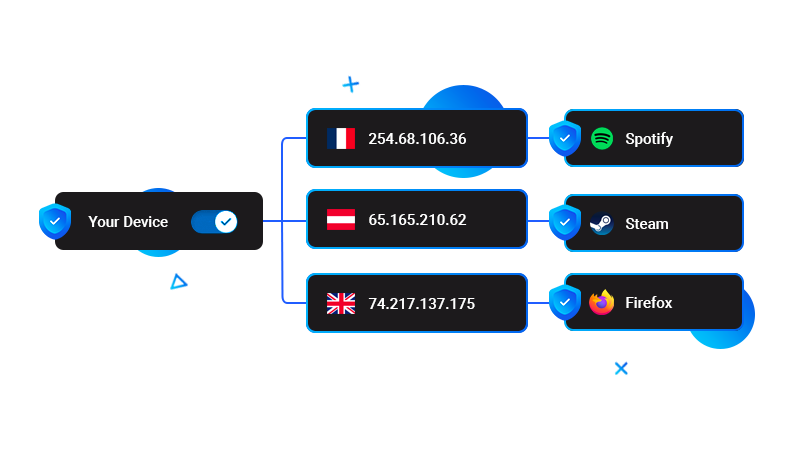
SPN calculates a separate path for each connection, routing it through different nodes and exit points. Each app gets a distinct IP address at a different location.
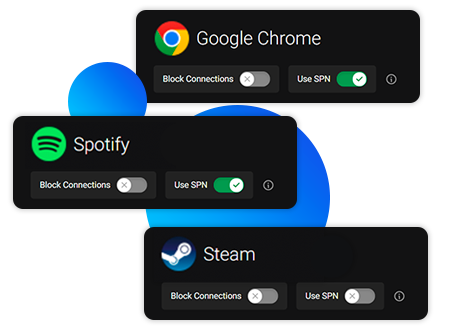
Exclude specific apps or domains from SPN, or restrict exit nodes to certain countries. Each setting is optional. The defaults work for most users without any changes.
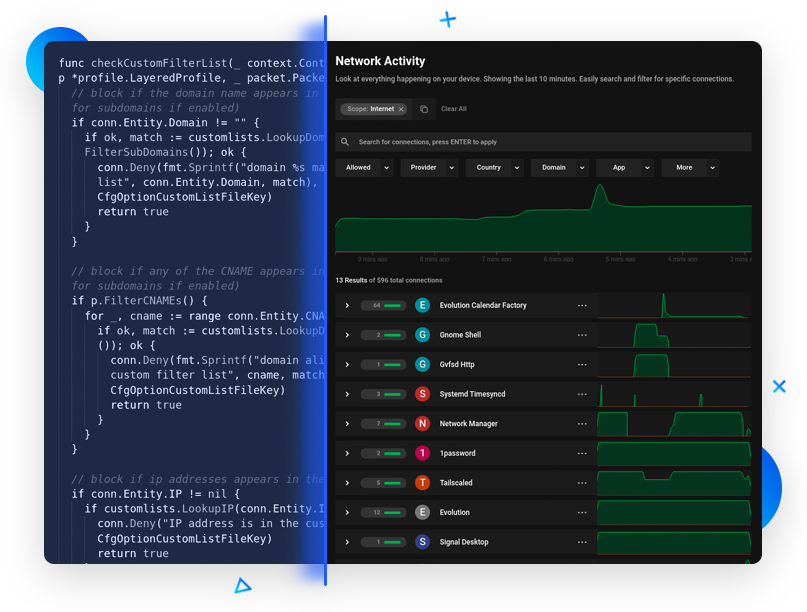
Inspired by Tor, SPN uses onion routing with layered encryption at each hop. The source code is available to inspect and audit.
Inspect source codeWatch a short video showing how SPN routes each app's connections through separate paths.

|
Most VPNs
Read Comparison Blog |
SPN | Tor | |
|---|---|---|---|
| Multiple Identities (simultaneous) | |||
| Automatic Geo-Unblocking | |||
| Individual Apps Settings | |||
| Easy Setup | Browser Only | ||
| Availabilty |
|
|
|
| Open Source | / |
Built with onion routing and layered encryption, designed to protect your network identity at the connection level.
Regain Control.
Regain Control.
You have more questions? Join the Discord community.
Read everything about the latest updates regarding Portmaster, SPN and Safing.